





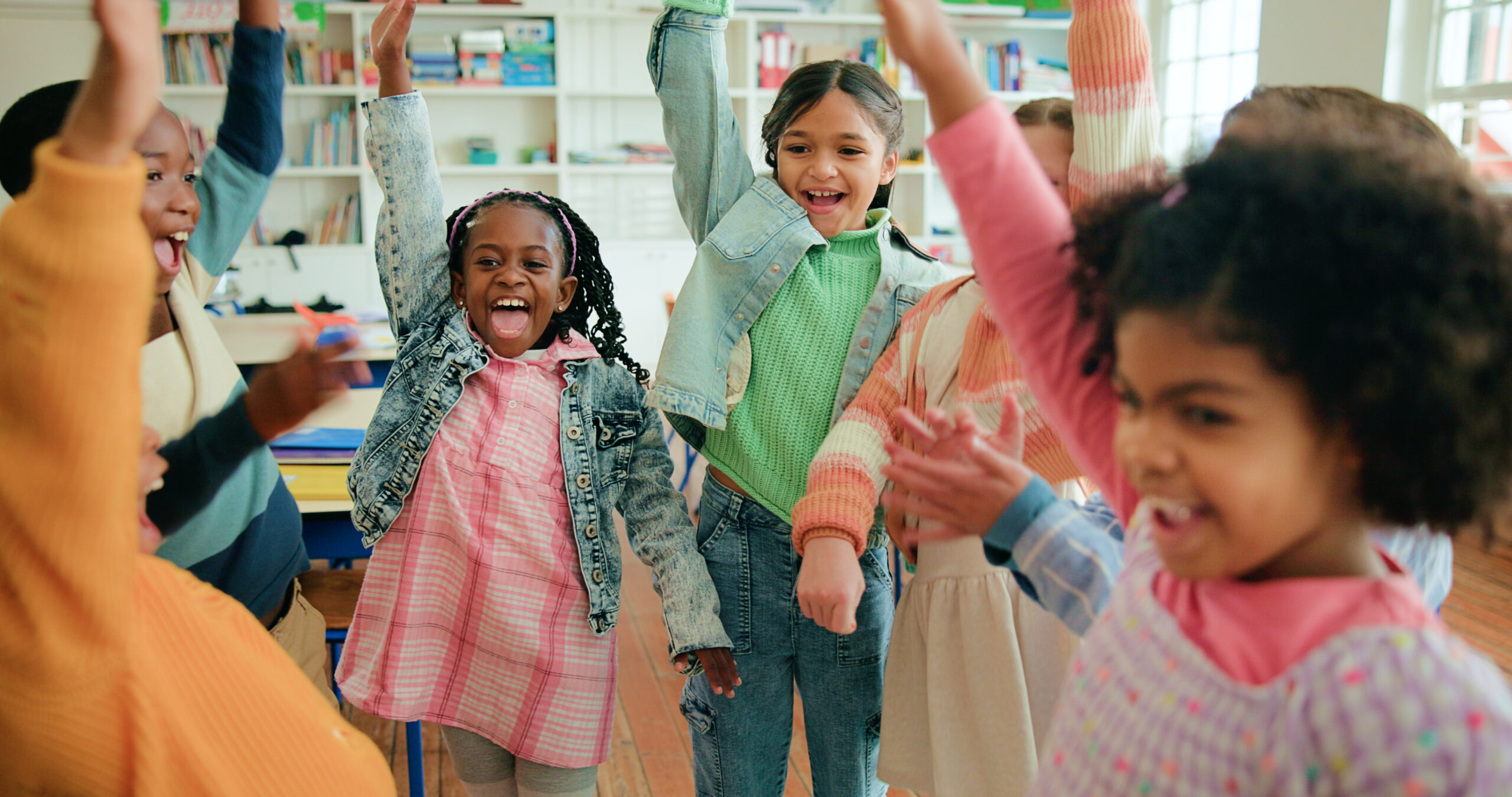
Teaching through the winter months can be challenging for both you and your students, and you may notice a decline in focus and energy. The good news? Brain breaks are here to help!
Brain breaks are intentional moments that provide students with space to recharge, refocus and return to learning with fresh energy. Brain breaks also offer real-time practice in cooperation, self-regulation and social awareness. When thoughtfully used, this classroom tool can help students return to their seats not only calmer, but also more connected and ready to learn.
When outdoor recess and activities are limited by weather, indoor classroom games, specifically winter classroom games, ensure students still get a much-needed brain break with enough movement and a chance to play without needing boots or snow.
In this post, you’ll find engaging indoor classroom games that help students burn off excess energy, refresh their minds and reinforce key learning concepts in a fun, non-strenuous way! Check out our other fun classroom games for ideas you can use year-round!
Indoor Classroom Games for Cold Weather Days
To keep spirits high on cold days, we’ve compiled a list of our favorite indoor classroom games. Consider these suggestions a flexible starting point; you know your students’ needs best, so feel free to mix and match or modify them to create the perfect brain break for your classroom!
1. Snowflake Tag (Energizing & Active)
- What you need: small paper snowflakes (10-12), masking tape or painter’s tape.
- How it works: Tape snowflakes randomly around the classroom. Choose one or two taggers. When the game starts, taggers quietly move to try to tap a student. If a student is tagged, they freeze but can be “unfrozen” if another student touches them. Students can avoid taggers by brushing against a snowflake (every snowflake can only be used once per tagger). Rotate taggers after two minutes.
This winter classroom game gets students moving, sneaking, dodging and thinking strategically. It also helps them burn off energy when stuck inside on grey winter days.
2. Snowball Toss (Cooperative & Fun)
- What you need: a few plush snowballs or balled-up white paper, a bucket or box.
- How it works: Split the class into small teams (4-6). Place a box or bucket a few feet away. On “go,” each team tries to toss their snowballs into the target. After one minute, count how many made it in. Optionally, challenge students to beat their score in a second round.
This game builds coordination, teamwork and hand‑eye coordination. You can definitely expect some laughter and friendly competition! This indoor classroom game is perfect for short bursts of energy. Check out our team-building activities for more inspiration!
3. Penguin Walk Relay (Active & Funny)
- What you need: a “start” and “finish” line and an optional penguin picture or cut-out.
- How it works: Students race across the room by walking with legs together and arms pinned to their sides, like penguins! For added challenge, have them carry a soft snowball between their knees or on a paper plate in their mouths. Do relays in teams.
The wiggly way of walking and balancing makes this both hilarious and a good movement break.
4. Snowman Freeze Dance (Rhythm + Movement)
- What you need: winter-themed music (holiday or non-holiday) and a space to dance.
- How it works: Play music and let students dance. When music stops, students “freeze” in a snowman pose (arms crossed, feet together). Anyone moving is out. Continue until only a few players remain or repeat several rounds.
This fast, engaging indoor classroom activity combines listening skills, self-regulation and joyful movement. It’s perfect for a mid-morning or afternoon slump!
5. Snowflake Scavenger Hunt (Calm & Collaborative)
- What you need: paper snowflakes (10-20), sticky notes, pencils, small prize or privilege.
- How it works: Hide snowflakes around the classroom before students arrive. Each snowflake has a letter or word on it. When students find a snowflake, they write down what it says. After all or most are found, have them unscramble the letters or words to reveal a winter-themed secret message or “class secret.”
This game encourages quiet movement, teamwork, observation and problem-solving. It also nicely transitions into writing or discussion about seasons, weather or cooperative discovery.
6. Arctic Animal Charades (Creative + Social)
- What you need: index cards with names of arctic or winter animals (penguin, polar bear, seal, snow owl, reindeer, etc.).
- How it works: Students take turns drawing cards and acting out the animal while classmates guess. You can make things more interesting by giving points for guesses within 10 seconds or by having students include facts about the animal after the reveal.
This classroom game idea promotes movement, creativity, peer interaction and knowledge about wildlife. It’s a good mix of fun and learning.
You can turn your class’ arctic or winter animal facts into a classbook! Our FREE publishing kit motivates your students to do their best work, enhances their reading and writing skills and creates a treasured keepsake.
7. Hot Cocoa Boogie (Movement + Coordination)
- What you need: Open space and a call-and-response routine like “Stir the hot cocoa! Sip it slow! Pass it left! Boogie low!”
- How it works: Teach the class the moves to match the chant. Call out commands in random order to build coordination and rhythm.
Silly, energizing and guaranteed to warm up a chilly afternoon. No hot cocoa spills to clean up here!
8. Winter Weather Mood Meter (SEL + Check-In)
- What you need: a poster or chart with weather icons (sunny, cloudy, stormy, calm) or winter weather icons (snow, sleet, clear, blizzard).
- How it works: At the start or end of a lesson, invite students to silently place a sticker or clothespin on the weather icon that matches how they feel.
This quick activity integrates social‑emotional reflection, giving students ownership over expressing their feelings. It also helps teachers gauge the collective mood and adjust plans accordingly. Although not as movement-based, it is essential to keep an eye on students’ mental and emotional well-being during colder months. See more quick SEL check-in ideas here!
Check out and download our FREE Brain Breaks Bundle for more inspiration! We have games, puzzles and coloring pages that are out of this world!
Are you Enjoying this Content?
Designing Brain Breaks That Work: Tips & Strategies
Effective indoor classroom games are more than just fun—they’re tools to reset attention, reduce stress and create a positive classroom culture. Here’s how to make your brain breaks impactful and engaging all season long.
Designing Brain Breaks That Work: Tips & Strategies
Effective indoor classroom games are more than just fun—they’re tools to reset attention, reduce stress and create a positive classroom culture. Here’s how to make your brain breaks impactful and engaging all season long.
1. Variety Over Repetition
Balancing active and calming breaks helps regulate classroom energy and meet students where they are emotionally and physically throughout the day.
It’s easy to fall into a routine, but varying the type of break keeps students engaged and motivated. Consider rotating between three categories:
- Energizing: Great for boosting alertness. These include quick movement games like “Snowman Freeze Dance” or “Hot Cocoa Boogie.”
- Mindful: Perfect for group check-ins and gauging your students’ energy. Try an emotions chart like a “Winter Weather Mood Meter.”
- Social or Creative: Encourage connection with games like “Arctic Animal Charades” or “Snowball Toss.”
2. Keep It Inclusive
When students feel safe and supported, they’re more likely to benefit from the break and enjoy it! Every student brings different comfort levels and needs to the classroom. Make sure brain breaks:
- Offer opt-in activities like journaling or drawing alternatives for students who prefer quiet.
- Utilize games that require volunteers. You can encourage quieter students to participate in 1:1 moments.
- Allow partner or small-group variations for students who may struggle with whole-group participation.
3. Connect Breaks to Learning
When students move and learn at the same time, they’re more likely to retain concepts and enjoy the process.
Brain breaks can be played with purpose. With a bit of creativity, you can sneak in academics:
- Games like “Snowball Toss” can review math facts, vocabulary or social studies topics.
- Use “Arctic Animal Charades” as a springboard into science lessons about winter habitats or ecosystems.
- Try “Snowman Stack Challenge” followed by a writing reflection on team strategy or engineering challenges.
- Publish a classbook with topics like “Our [Insert Grade Level] Winter” or “Our Favorite Winter Activities.” Click below to get your FREE classbook publishing kit and learn more about the publishing process!
4. Embed Brain Breaks into Routine
Routine breaks help reduce behavior issues, reset attention and keep the flow of the day smooth.
Rather than seeing brain breaks as extra time, use them to support classroom structure.
- Add breaks between subjects to help students transition focus.
- Use them after high-effort tasks such as tests or writing assignments to prevent burnout.
- Keep them predictable by establishing set times. Think before lunch, after recess or as a late afternoon energy booster.
Sample Winter Brain Break Activity Schedule
Here is an example schedule showing how to integrate brain breaks across a typical winter school day:
|
Time |
Brain Break Activity |
Purpose |
|
9:30 AM (after morning work) |
Snowflake Tag |
Energize and refocus attention |
|
10:30 AM (after reading) |
Snowflake Scavenger Hunt |
Calm down and recharge focus |
|
12:15 PM (after lunch) |
Penguin Walk Relay |
Help get the wiggles out post-lunch |
|
2:00 PM (before afternoon work) |
Hot Cocoa Boogie |
Promote movement and attention reset |
|
3:00 PM (end of day) |
Winter Weather Mood Meter |
Reflect, connect and end on a positive note |
Bonus: Indoor Recess Games That Keep Energy Up (and Walls Intact)
In the name of staying active when the weather keeps students inside, indoor recess games become essential for helping them release energy. They offer the same benefits as outdoor play and are quick to set up. These recess activities are more than just time-fillers; they’re essential tools for keeping students physically active, emotionally balanced and ready to return to learning with fresh energy.
Try these favorites:
- Silent Speed Ball: Students toss a soft ball around the room without talking. If someone drops it, makes a noise or throws too wildly, they sit down. The last one standing wins!
- Four Corners: Label the corners of the room with numbers. One student counts with their eyes closed while the rest choose a corner. The counter calls a number, and anyone in that corner is out.
- Classroom Bowling: Use plastic cups and a soft ball to create a makeshift bowling lane.
- Tabletop Games: Rotation stations featuring puzzles, card games or building blocks allow students to engage in quiet play and reset their focus.
Embrace the Winter, Inside and Out
With these ideas, a little planning and a dash of creativity, your classroom can stay lively, connected and focused through the winter months. When you build regular brain breaks into your schedule, you give students not only a moment to reset but a chance to grow socially, emotionally and cognitively.
Try a few of the brain break ideas today and watch the smiles, wiggles, and calm return with a renewed focus. You may find your winter classroom becomes one of the brightest, most productive spaces in the school.
At Studentreasures, we make it easy to turn classroom writing and activities into something lasting. From journal entries to winter stories, our FREE classbook publishing kits showcase your students in a meaningful and memorable way.
Looking for more ideas? Visit our Teacher’s Lounge and blog for writing tips, lesson inspiration and free resources designed just for you. Because every student deserves the chance to become a published author!