





Are you a teacher who dreams of having a beautifully decorated classroom, but can’t afford it? You’re not alone. Most educators go into teaching knowing what it takes just to make their classrooms functional and engaging, but what some don’t expect is the expense. We have an entire blog category related to money-saving tips if you want to find more ways to save!
According to the National Education Association, teachers in the United States spend between $500 and $900 of their own money on classroom supplies each year. This cost has made the “retail classroom” aesthetic increasingly unsustainable. In response, resourceful educators are pivoting toward upcycling—the art of transforming everyday items into functional tools.
In this blog, you’ll find creative classroom storage ideas using items you already have or can easily collect. You’ll also learn why upcycling is a smarter approach for classroom organization. Start creating a space that works better for you and supports your students without breaking the bank. Want to amp up your classroom decor but don’t have a lot to spend? Download our FREE Classroom Decor Bundle!
Kitchen Finds for the Classroom
Some of the best classroom storage ideas are already in your kitchen. We listed below our top four classroom storage ideas you can find in your kitchen or pantry.
1. Cereal Box Stationery Systems
Turn empty cereal boxes into magazine holders or paper organizers by cutting them diagonally and covering them with paper or fabric.
How to use it: Create individual “book boxes” for independent reading. Students can store their books, writing journals and classbook drafts all in one place.
Try this! Have your students cover the book boxes with construction paper and decorate their boxes with markers to make each book box unique.
2. Magnetic Tin Can Board
Clean and remove labels from cans, then cover sharp edges with tape or sand them down.
Attach magnets to the back of the cans, and place them on a metal surface like a pizza pan to create a “supply tree.”
How to use it: Store pencils, markers, scissors or any other small supplies at a central location students can easily access.
Try this! Paint or use construction paper to make the pizza pan green and the tin cans red, so it looks like a real tree.
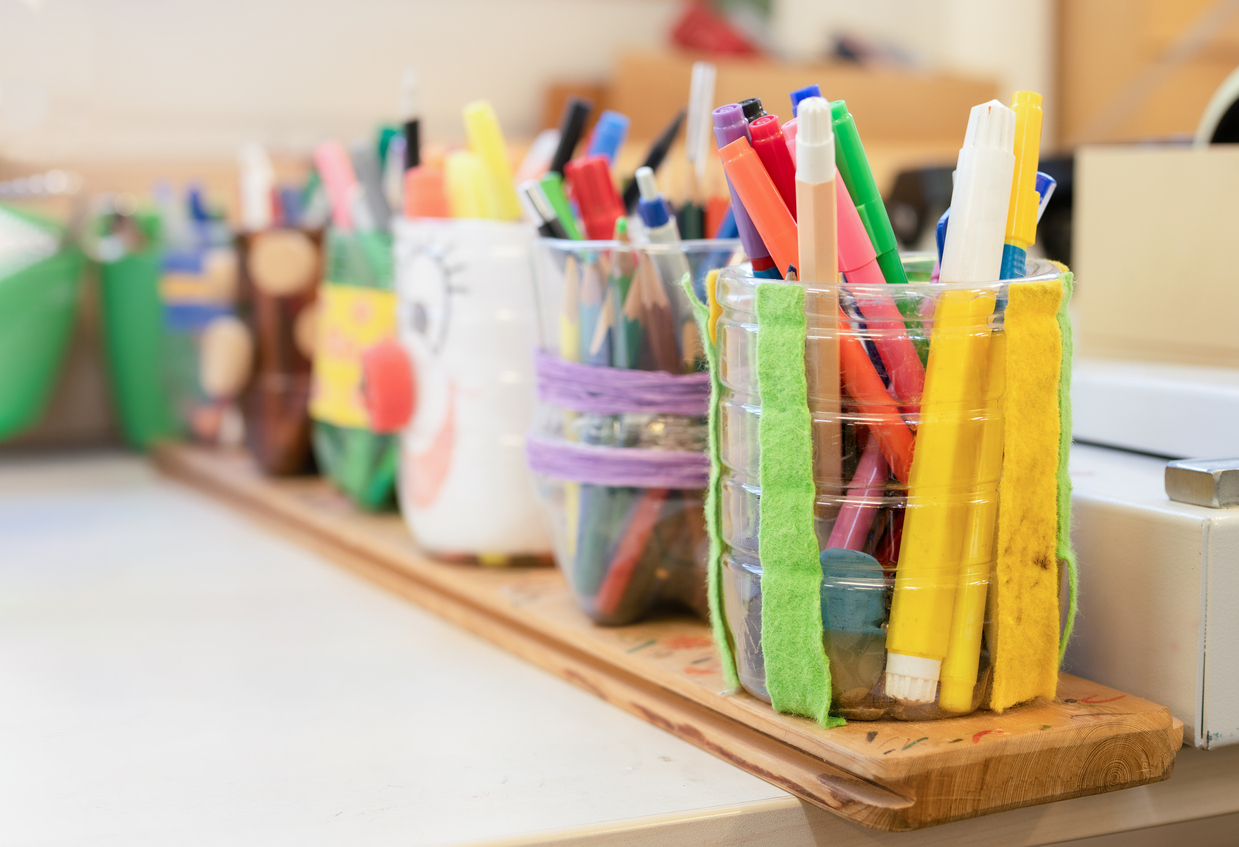
3. Glass & Plastic Jar Visibility Centers
Clear jars make it easy for students to see what’s inside.
Hack: Mount lids under shelves so jars twist on and off, saving space.
How to use it: Store math manipulatives or create “estimation jars” that double as storage and learning tools.
Try this! Add labels for each jar’s contents on the lids, so students can also learn what is inside, and to keep items in the correct jars. (e.g., “coins,” “beads” and “transparent counters”)
4. Egg Carton Mini-Organizers
Egg cartons are perfect for sorting small items such as buttons, dice, paperclips and more!
How to use it: Use them during small group math to organize counters, coins or beads.
Try this! Have students use paint or markers to decorate the egg cartons.
Repurposing Home & Office Items
Before tossing everyday items, consider how they can support your classroom organization. These upcycled classroom storage ideas are easy to source, simple to customize and actually hold up in a busy classroom.
1. Shoe Box Shelving & Dividers
Sturdy shoe boxes can quickly become functional storage with a few small adjustments.
How to use it:
- Stack and glue or tape boxes together to create mini shelves for books or supplies
- Cut boxes into sections to create drawer dividers for your desk or supply cabinets
- Use a larger boot box to create a simple charging station for tablets or small devices
Try this! Wrap the boxes in neutral wrapping paper, bulletin board paper or fabric, and add simple labels to keep everything cohesive.
2. Cardboard Drink Carrier Caddies
Drink carriers from places like Starbucks or McDonald’s are an easy way to add to your classroom storage.
How to use it:
- Turn them into table caddies for markers, glue sticks and scissors
- Assign one per group so students can grab supplies quickly during activities
- Use them for rotating centers or small group work to keep materials contained
Try this! Paint them different colors to make each one unique. Add small labels or icons so students know exactly what belongs in each slot.
3. Paper Towel & Toilet Paper Roll Reuse
These are simple, but surprisingly effective for keeping small items organized.
How to use it:
- Create “crayon condos” by gluing rolls upright inside a box to separate colors
- Use them for cord management by wrapping and storing charging cables neatly
- Store pencils or markers vertically inside a larger container
Try this! Group them inside a decorated box or tray instead of leaving them loose. You can also wrap the rolls in paper for a cleaner look.
4. Coffee Creamer Containers
Plastic coffee creamer bottles (like the ones from grocery stores) are perfect for the storage of items that need to be poured or dispensed easily.
How to use it:
- Store snacks, rice, sand or small sensory materials
- Use them for art supplies like beads, glitter or craft pieces
- Create a controlled pour station for science or sensory activities
Try this! Remove labels and add your own. Stick to consistent colors across containers to reduce visual clutter.
Larger-Scale Transformations
If you’re ready to take your classroom storage ideas a step further, these larger projects can make a big impact on both classroom organization and student experience.
1. Milk Crate Modular Storage
Milk crates are durable, stackable and easy to find through donations or local stores.
How to use it:
- Stack them to create cubbies for student materials or book bins
- Turn them into flexible seating by adding a cushion or piece of wood on top
- Use them as portable storage that can move around the classroom
Try this! Use matching cushions or fabric covers to create a more cohesive look.
2. Shipping Pallet Bookshelves
Wood pallets can be transformed into functional bookshelves.
How to use it:
- Create a low bookshelf for easy student access
- Design a cozy reading nook for independent reading or quiet work
- Use it to display books students are using during writing or classbook projects
Try this! Sand then paint or stain the wood in a neutral tone for a cleaner, more finished look.
3. Pizza Box Portfolios
Pizza boxes are the perfect size for storing larger student work.
How to use it:
- Give each student a labeled box to store writing drafts and artwork
- Use them to organize pages for a classbook project
- Stack them neatly for easy access during work time
Try this! Cover the top with paper or paint the boxes, and let students decorate their own portfolio for a personal touch.
Budget-Friendly Decor & Engagement
A well-organized classroom can still feel warm and inviting—without the extra cost. Click here to get our FREE Classroom Decor Bundle!
1. Paint Chip Masterpieces
Those free paint swatches from hardware stores are surprisingly versatile.
How to use it:
- Create a color-coded system for subjects, groups or classroom storage ideas
- Build vocabulary walls by assigning different colors to word types or themes
- Use them for matching games, sorting activities or quick visual references
Try this! Create “Mood Meters” by giving each student a 3-color strip (green, yellow and red); they can use a clothespin to indicate if they are “good to go,” “feeling stuck,” or “need immediate help” during independent work time.
2. Nature as Decor
Bring in natural elements to create a calm, grounded environment that pairs well with your upcycled classroom storage ideas.
How to use it:
- Add rocks, branches or pinecones to reading corners or shelves
- Use natural materials as manipulatives for counting, sorting or science lessons
- Incorporate them into seasonal displays or writing prompts
Try this! Paint stones or use leaves as prints when painting to add some colorful decorations.
3. Laminating Alternatives
Lamination can get expensive quickly, especially with frequently used materials. Instead, try these ideas.
How to use it:
- Place worksheets or reusable pages in sheet protectors for repeated use
- Use clear packing tape to reinforce edges or protect small materials
- Store reusable resources in binders or folders for easy access
Try this! Snag a pack of clear vinyl pocket folders (often found at dollar stores) and stick them to the front of student desks; you can swap out name tags, daily schedules, or “helper” badges without ever needing to re-laminate or scrape off sticky residue.
Are you Enjoying this Content?
Maintaining the System: Year-Round Strategies
Even the best classroom storage ideas need simple systems to keep them working.
The 10-Minute Friday Audit
Set aside a few minutes at the end of the week to reset supplies and tidy up key areas. A small habit makes a big difference over time.
Classroom Jobs 2.0
Give students ownership of your classroom organization system.
Ideas:
- “Supply Architect” to organize materials
- “Bin Boss” to check that items are returned correctly
- “Clean-Up Crew” to reset stations
Asking for Donations (Without the Awkwardness)
You don’t need to ask for money—just be specific.
Try this: Send a quick note home asking for items like jars, shoe boxes or drink carriers. Most families are happy to contribute when they know exactly what you need.
More Classroom Storage Ideas and Tips
Upcycling isn’t limited to bins and containers. Support your entire classroom setup with these low-cost hacks.
1. The “Hardware Store” Hack
Paint buckets and tool belts can act as mobile supply stations.
How to use it:
- Carry supplies around the room during small group instruction
- Create grab-and-go kits for activities or centers
Try this! Label the kits so that students can easily identify what each one contains.
2. The “Curtain Call”
Open shelving can quickly look cluttered, even when it’s organized. Add a curtain to cover up any clutter.
How to use it:
- Use old bedsheets, fabric or tension rods to cover shelves
- Hide visual clutter while still keeping materials accessible
Try this! Tie-dye white bedsheets or fabric to add a pop of color to your curtains.
3. Digital Storage Counts Too
Classroom organization isn’t just physical. Using tools like Google Drive or Canva to organize lesson plans, worksheets and templates can save time and reduce daily stress.
How to use it:
- Create clearly labeled folders by subject, unit or month so you can quickly find what you need
- Save and organize reusable templates for things like worksheets, newsletters or classbook pages to avoid starting from scratch
- Store and sort student writing drafts digitally when possible, especially during larger projects like classbook creation
Try this! Use a standardized naming convention for all your files (e.g., YYYY-MM-DD_Subject_Topic) and add emojis to folder names (like 🍎 for Lessons or 📝 for Assessments) to make them instantly recognizable at a glance.
It’s What You Do, Not What You Buy
An organized classroom doesn’t just look better—it works better.
When students can easily access their materials, they can focus on learning. Writing and other activities become more enjoyable when supplies are ready to go and distractions are minimized.
This is especially important during larger projects like creating a classbook. With our FREE classbook kits, teachers can guide students through the writing process without worrying about added costs.
As students write, revise and illustrate their stories, they experience the pride of becoming published authors. A well-organized classroom supports that journey by making materials accessible and the process manageable.
At the end of the day, a successful classroom isn’t defined by perfectly matched bins or trendy decor. It’s defined by how students feel and what they learn. Upcycled classroom storage ideas offer a practical, meaningful way to create a space that works for both you and your students. They support classroom organization, reduce costs and model creativity in action.
Looking for more free resources and inspiration? Visit our Teacher’s Lounge for free printable worksheets, templates and classbook ideas. You can also explore our blog for additional savings tips and teaching strategies to keep writing and vocabulary instruction engaging all year long.